Updated 25-March-2026
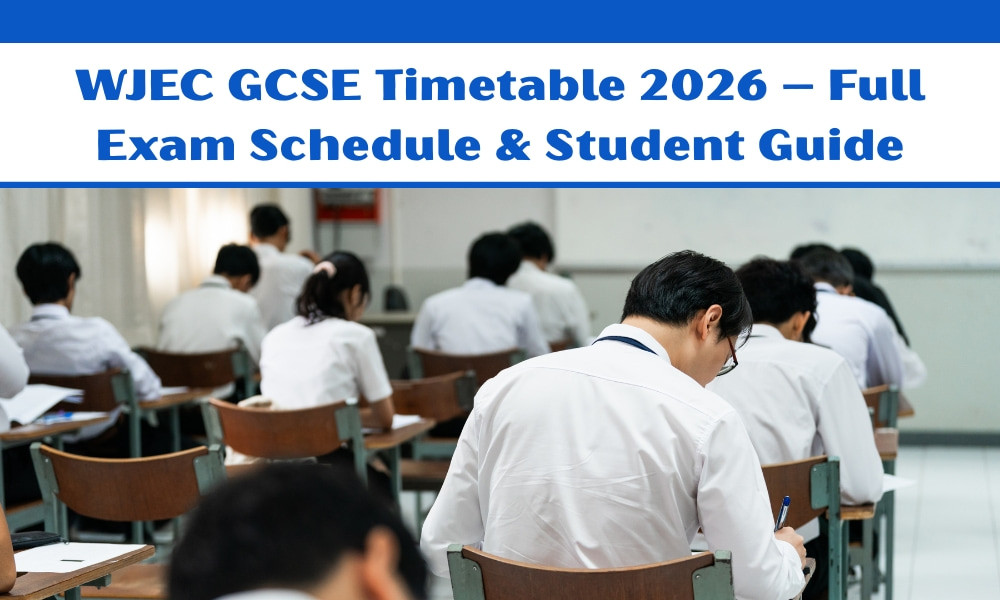
If you’re studying for GCSEs in Wales, the first step in effective revision is to know exactly when your exams take place. The WJEC (Wales and Eduqas) GCSE timetable 2026 runs from early May until mid‑June. Understanding the schedule allows you to plan your 60‑day revision strategy, prioritise subjects and avoid last‑minute cramming. This guide presents a simplified overview of the official timetable, focusing on the core subjects most students take, and links to the official WJEC PDF for full details.
Remember that exam dates and times can change. Always confirm with your school or exam centre, and keep an eye on any updates from WJEC. Morning exams typically start at 9:00 AM, and afternoon exams start at 1:30 PM, but centres can adjust these slightly to suit their timetable.
Below is a summary of the main GCSE subjects. We’ve grouped the timetable by subject with the paper, exam date and duration. For subjects with separate foundation and higher tiers, durations are shown for both tiers where relevant.
*Times shown are typical start times. Always check with your centre for exact start times.
According to WJEC’s notes, morning exams usually start at 9 AM and afternoon exams at 1:30 PM, but centres may adjust slightly. Candidates must remain available until the designated contingency sessions on 24 June 2026 in case exams are rescheduled due to national disruption.
You can download the full official timetable directly from WJEC:
👉 View Official WJEC GCSE Timetable 2026
The PDF includes every subject and tier, including less common courses such as Film Studies, Welsh Language and Cymraeg. Always rely on official sources to avoid incorrect exam dates. Our table focuses on the subjects most students take.
Now that you have the dates, the real benefit comes from using them wisely. Here’s how to turn a timetable into a winning revision plan:
Prioritise early exams. Start by identifying your first exam and allocate more revision time to that subject in the weeks leading up to it. For WJEC 2026, Mathematics – Numeracy Unit 1 and English Literature Unit 1 fall in the first two weeks, so they deserve early attention.
Plan around gaps. Look at the gaps between papers. For example, there are three weeks between Mathematics Unit 1 and Unit 2, allowing you to revise specific topics in between. Use these windows to review past paper questions and improve weaker areas.
Use a traffic‑light system. Categorise topics as red (hardest), amber (average) or green (easiest). Allocate more revision blocks to red topics, ensuring you tackle them when your energy is highest.
Mix subjects. Avoid studying the same subject all day. Mixing subjects (interleaving) has been shown to improve long‑term retention.
Schedule rest and self‑care. Regular breaks, exercise and sleep are just as important as study. Over‑revising can lead to burnout.
Practise past papers. Use the dates to simulate exam conditions. Sit past papers from Merit Study Resources on the same day of the week and time of day as your actual exams. This builds stamina and familiarity.
Students who perform well often adjust their revision as the exams approach:
Early May: Focus on subjects like Mathematics – Numeracy Unit 1 and English Literature Unit 1. Ensure you cover key topics and practise 1–2 past papers.
Mid‑May: Shift your focus to Sciences (Biology Unit 2, Chemistry Unit 2) and Business Unit 1. Continue to review Maths and English but start interleaving with these subjects.
Late May: As Unit 2 exams for English and Business approach, increase writing practice. Use timed essay plans and mark schemes for guidance.
June: Focus on second Maths papers, Sciences Unit 1, Geography and History. Practise high‑mark questions and work on exam technique. Use the gaps between exams for targeted revision and active recall.
Avoid these pitfalls when using the timetable:
They begin in early May. The first major exams include Mathematics – Numeracy Unit 1 and Electronics on 6 and 7 May.
For WJEC Maths – Numeracy, Unit 1 is in early May and Unit 2 takes place on 3 June. This gives students around three weeks between papers to consolidate learning and practise past questions.
Most core subjects are scheduled in the morning, but some units (particularly Sciences, Business and Computer Science) have afternoon sessions. Always check the official timetable for your specific paper.
Yes. WJEC designates Wednesday 24 June as a contingency session. You must remain available until then in case exams are rescheduled due to unforeseen circumstances.
The official timetable is available on the WJEC website. We’ve linked it above; always use the most recent PDF to avoid outdated information.
The WJEC GCSE timetable is more than just a list of dates – it’s a roadmap for your revision journey. By mapping your study plan to the exam order, mixing subjects and building in breaks, you can approach each paper feeling prepared and confident. For help booking exams, practising past papers or getting personalised tuition, explore the resources on our partner sites Merit Tutors and Merit Study Resources.
Recent Posts
Categories
Tags